
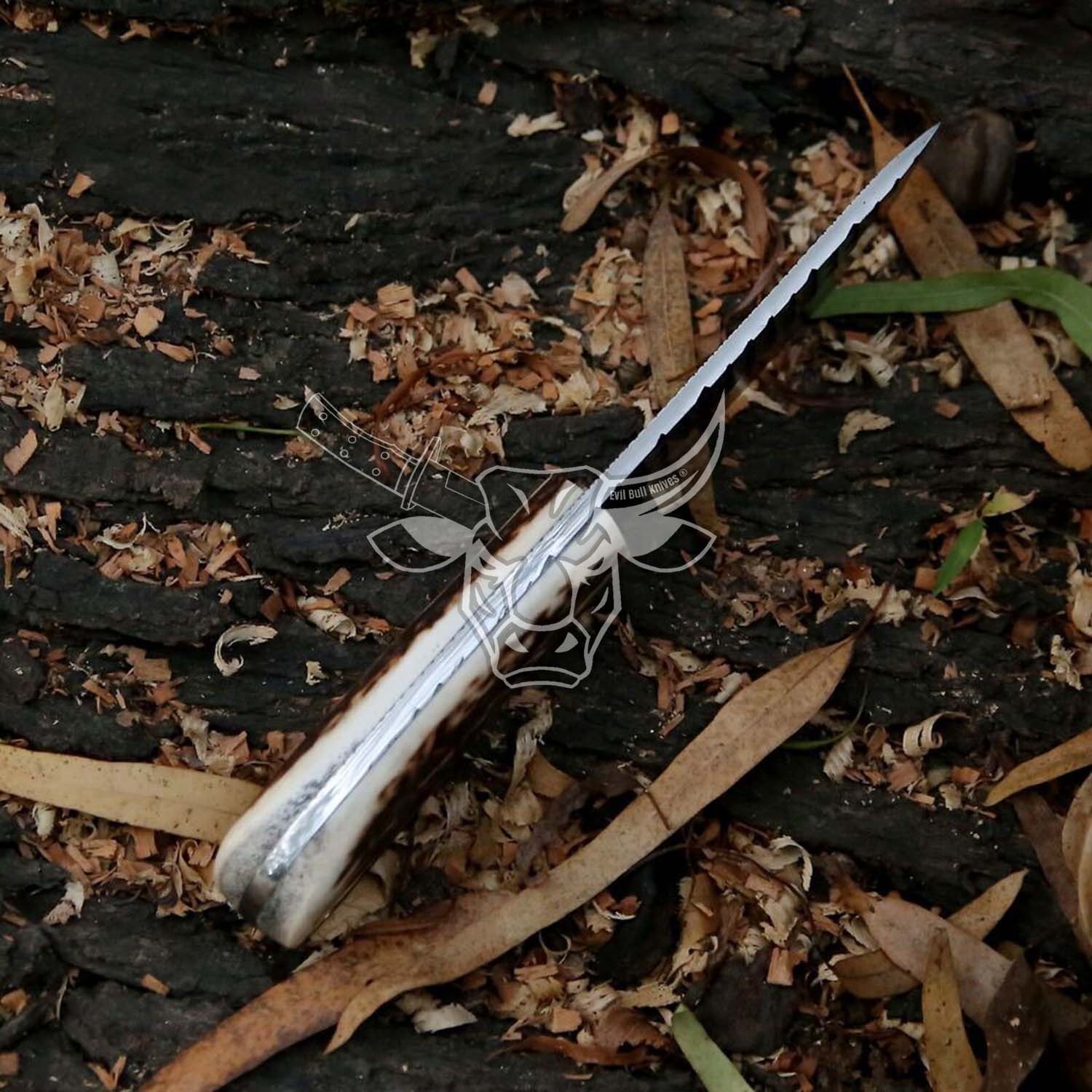
A rasp knife starts out as a farrier's rasp, the coarse file used to trim and level a horse's hoof. The smith forges that file into a blade and leaves the teeth showing on part of the steel, so each knife keeps the pattern of the tool it came from. We list four of them here. Every one has a 4 inch blade, measures 8 inches overall and comes with a leather sheath. Handles are antler, walnut, or resin paired with wood. They are small fixed blades made by hand, and custom engraving is available if you want a name or initials on yours.
Filters
Sort Featured


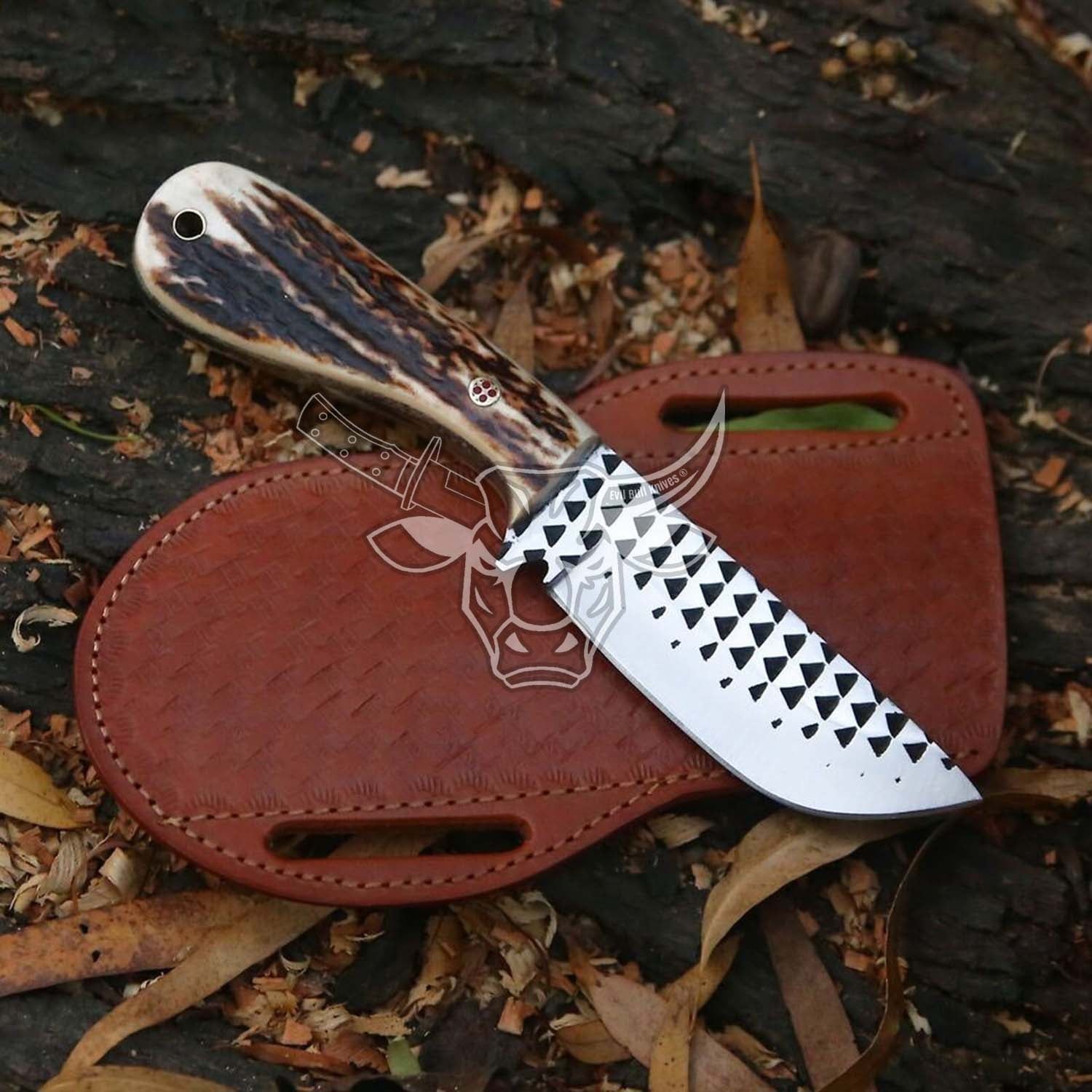
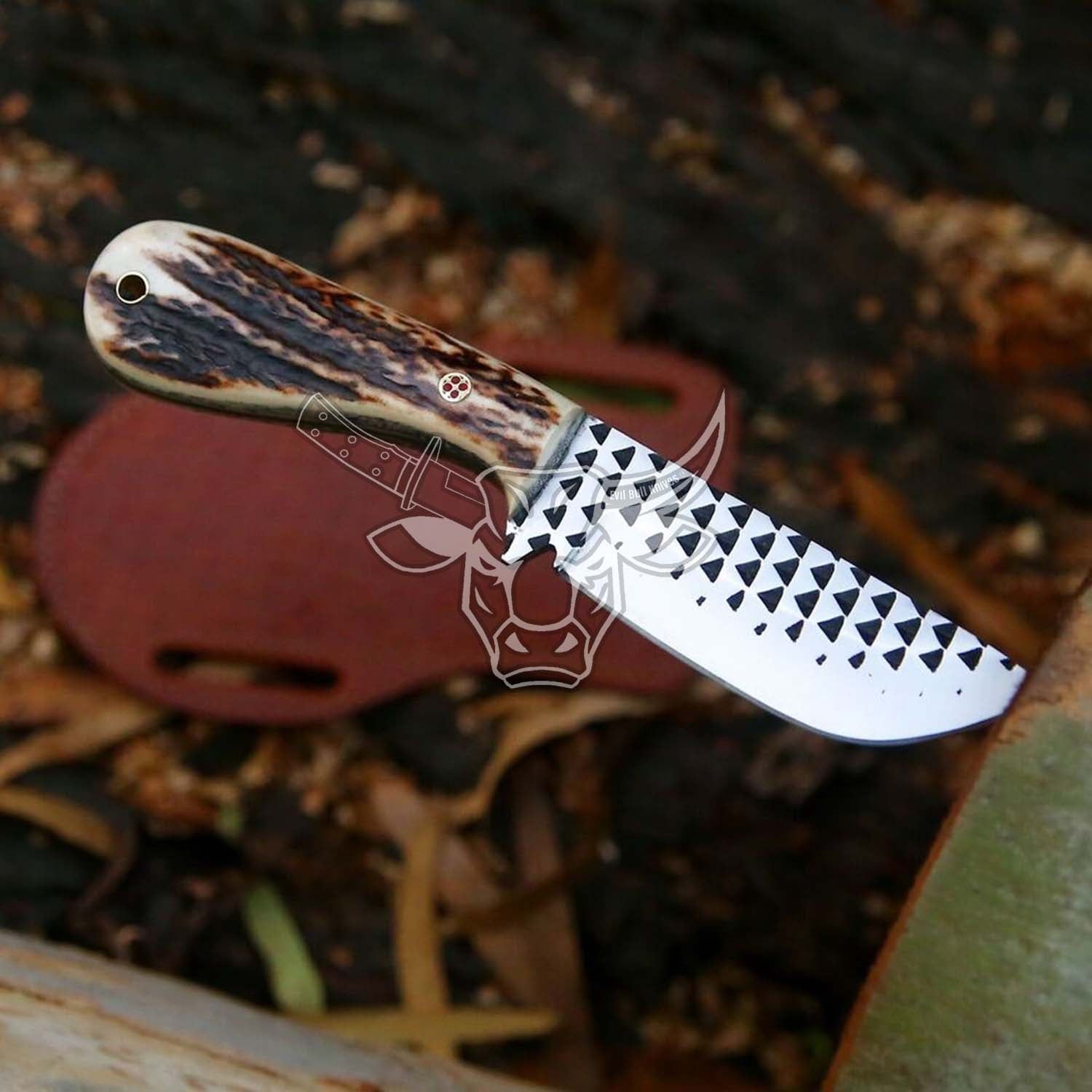
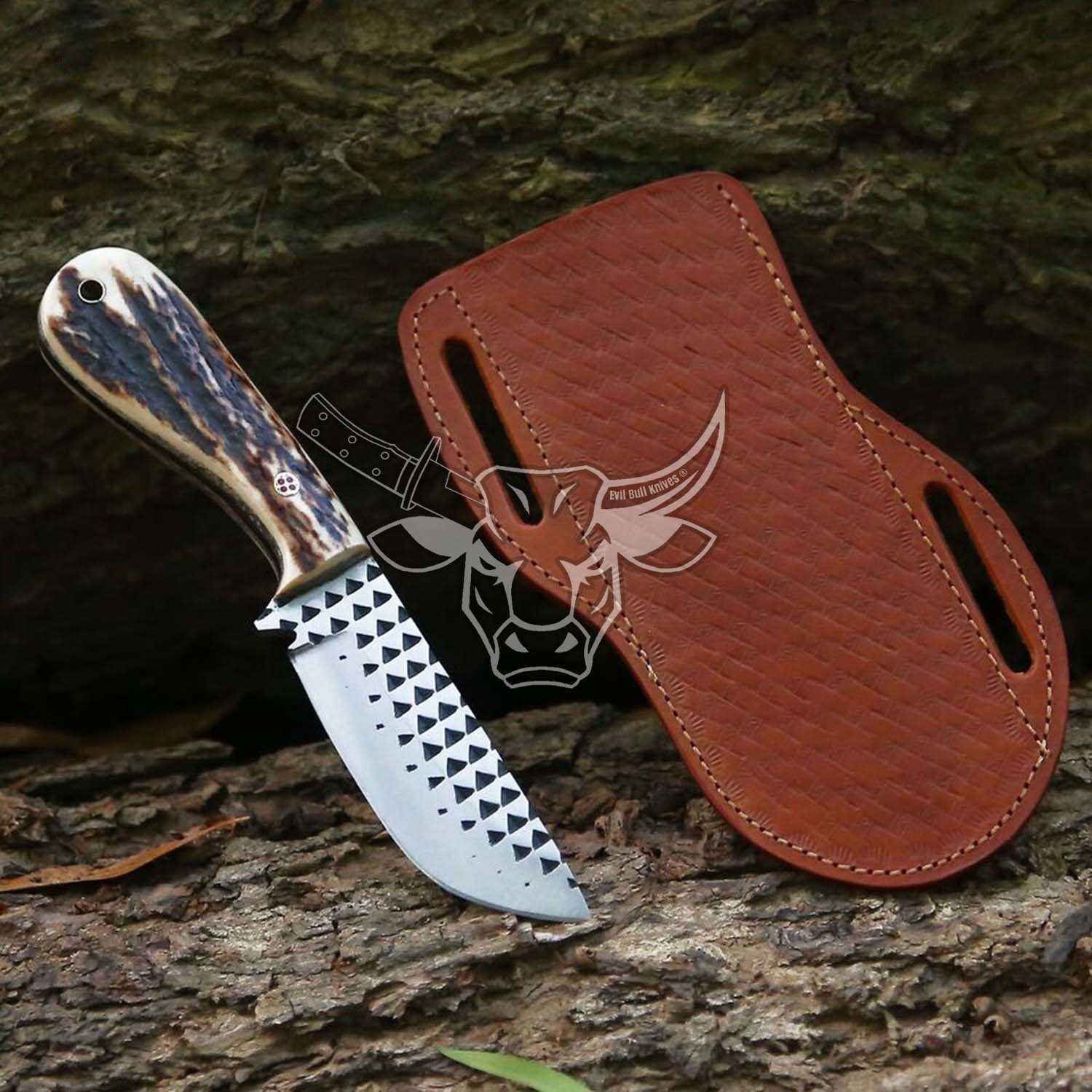
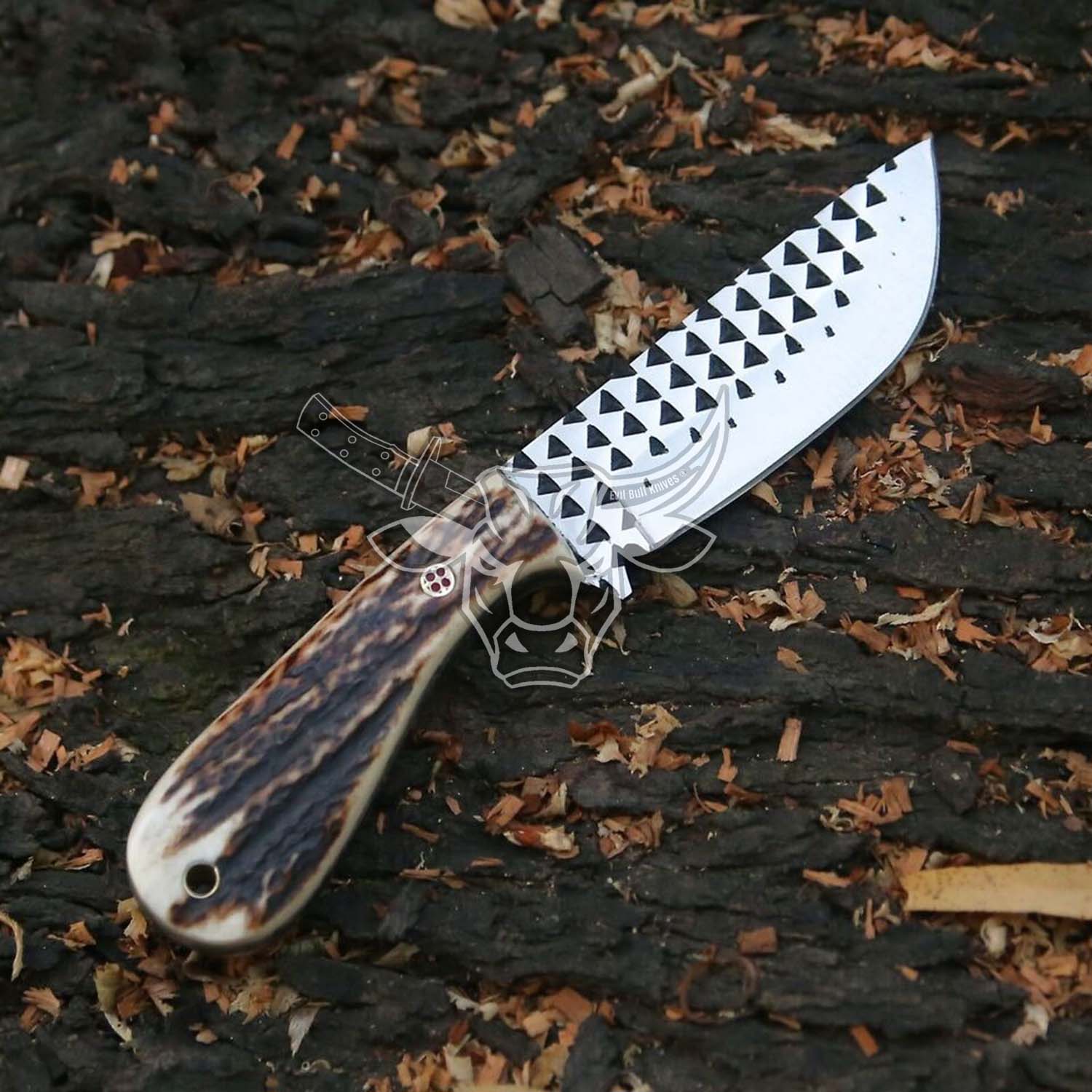

What is a rasp knife?
A farrier's rasp is a long, flat file with rows of raised teeth. Farriers wear through them steadily, and a rasp that no longer bites into hoof still has plenty of steel left in it. A knife maker heats the old file, hammers it to shape and grinds an edge, then stops short of polishing the flats. The teeth stay. That texture is the whole point of a farrier rasp knife: it shows you what the blade used to be. You will also see them sold as rasp steel knives or file knives.
The four rasp steel knives
The size is the same across the range. What changes is the blade shape and the handle.
| Model | Blade | Steel as listed | Handle | Sheath |
|---|---|---|---|---|
| EBK-138 Turquoise Rasp Skinner | 4 inch skinner | J2 rasp steel | Resin and wood, turquoise tone | Cowhide |
| EBK-139 Rasp Dagger | 4 inch dagger | J2 rasp steel | Resin and rosewood | Cowhide |
| EBK-140 Rasp Antler | 4 inch fixed blade | J2 rasp steel | Antler | Cowhide |
| EBKRS Rasp Steel Knife | 4 inch fixed blade | Rasp steel | Walnut | Cow leather |
In the photos, the EBK-138, EBK-139 and EBK-140 carry the file teeth across most of the blade flat. The EBKRS keeps them to a strip along the spine, which makes it the quiet one of the group.
Which one to pick
For hide work, the Turquoise Rasp Skinner has the curved edge you want. The Rasp Antler is the traditional choice, with a natural antler handle that differs on every knife. The Rasp Dagger is the collector's piece, and the walnut handled EBKRS suits everyday chores.
Caring for rasp steel
None of these listings call the blade stainless, so look after it the way you would any carbon steel. Wipe it dry after use and rub on a thin coat of oil, working it into the teeth where moisture likes to sit. Leather holds damp, so store the knife out of its sheath if it will sit for months. When you sharpen, work the edge bevel only and leave the teeth alone.
Rasp knife questions
Are the teeth on the blade sharp?
They are what is left of the file. They feel rough under a thumb and do none of the cutting. The ground edge does that.
Can a rasp knife be engraved?
Yes. Custom engraving is offered on all four and adds 2 to 3 weeks to production. Personalized knives cannot be returned.
What is the return policy?
Returns are accepted within 30 days of delivery for knives that are unused, not personalized and still in the original packaging.
Related collections
Rasp steel is a regular sight on ranch knives, so the cowboy and western knives are the natural next stop. For more blade shapes, see the skinner and skinning knives, the mini daggers and skinners or the full hunting and field range. Our guide What is a bull cutter knife? covers another ranch pattern that is often forged from rasp steel.


