
This is every Damascus steel knife we make, gathered in one place. There are about a hundred pieces right now: hunting knives, skinners and gut hooks, bowies, pocket folders, fillet knives, chef sets, a tanto or two, and a few Viking axes and swords for people who find a knife a bit small. Every blade here is pattern welded steel, made by hand and etched so the layers show. No two patterns come out the same, so the knife you receive will not be an exact copy of the photo.
Handles run from stag antler and camel bone to rosewood, walnut and ram horn, and many of the fixed blades come with a leather sheath. Below the knives you will find a plain guide to what Damascus steel is, how to pick a knife by the job you have for it, and how to stop it rusting.
Filters
Sort Best selling
-
Bane Presence Damascus Folding Knife – Wenge and Rosewood Handle -
Bonecap Damascus EDC Knife – Bone Handle -
Modern Util Damascus Folding Knife – Rosewood Handle -
Charcoal Damascus Chef Knife Set – Rosewood Handle -
Bison Arc Damascus Ulu Knife – Walnut and Buffalo Horn Handle -
Wenge Trail Damascus Hunting Knife – Wenge and Turquoise Handle -
Antler Damascus Skinning Knife – Stag Antler Handle -
Plainwood Damascus EDC Knife – Wood Handle -
Vesper Bone Damascus Utility Knife – Bone Handle -
Nomad Damascus Camp Axe – Leather Sheath Included -
Western Feather Damascus Hunting Knife – Rosewood Handle -
Bone Presence Damascus Folding Knife – Stag and Bone Handle -
Stout Damascus Skinning Knife – Bull Horn Handle -
Winged Damascus Gut Hook Knife – Resin, Bone and Rosewood Handle -
Inkwave Hand Engraved Damascus Knife – Full Damascus Handle -
Bonefish Damascus Fillet Knife – Wood and Bone Handle -
Swinging Damascus Tanto Folding Knife – Rosewood Handle -
Royal Damascus Folding Knife – Olive Wood Handle -
Gentleman Damascus Folding Knife – Rosewood and Resin Handle -
Noir Bull Damascus Skinning Knife – Dark Hardwood Handle -
Ringscout Damascus Hunting Knife – Hardwood Handle -
Switchback Damascus Bowie Knife – Olive Wood Handle -
Forest Ember Damascus Lockback Knife – Hardwood and Resin Handle -
Ravenfold Damascus Folding Knife – Dark Wood Handle






What Damascus steel is
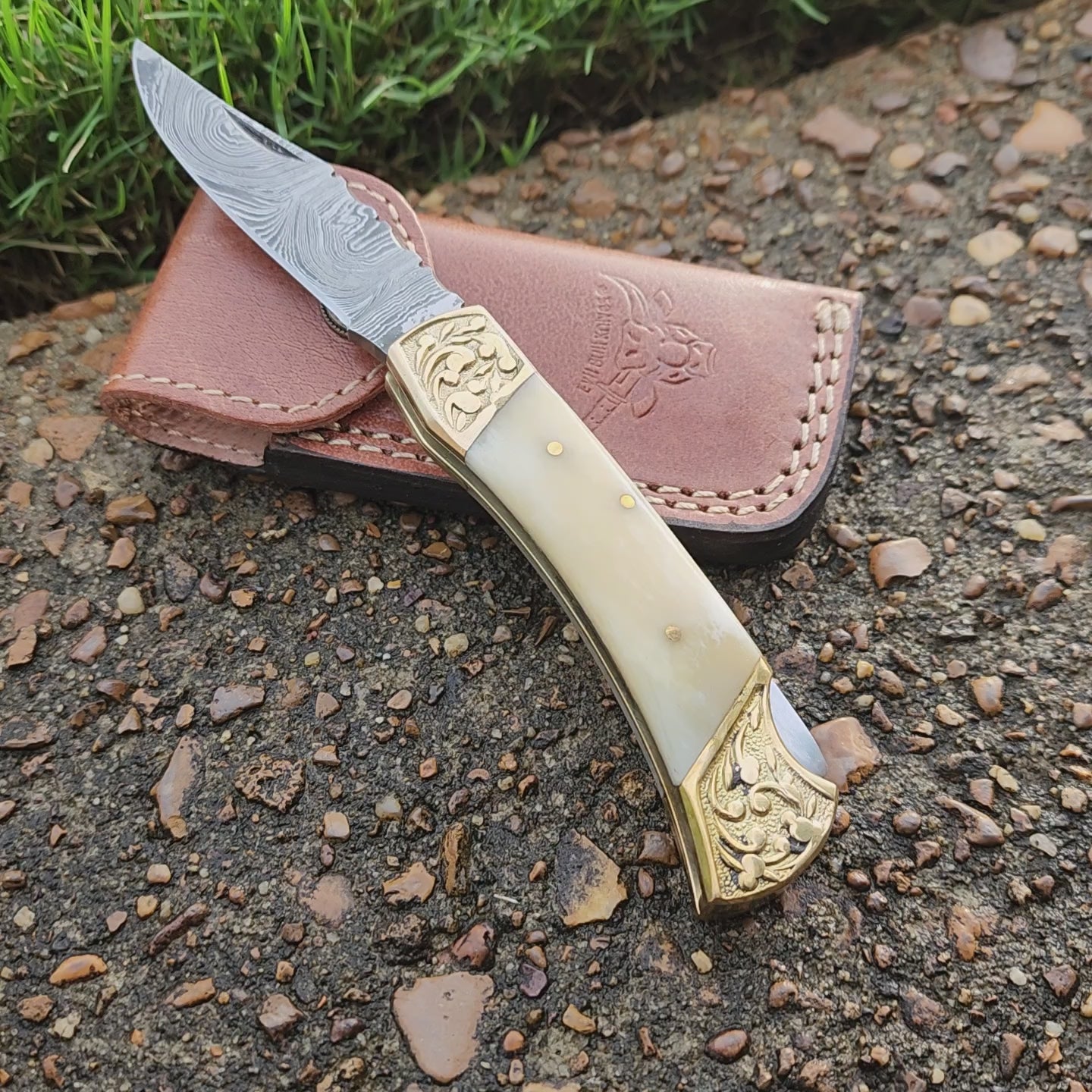
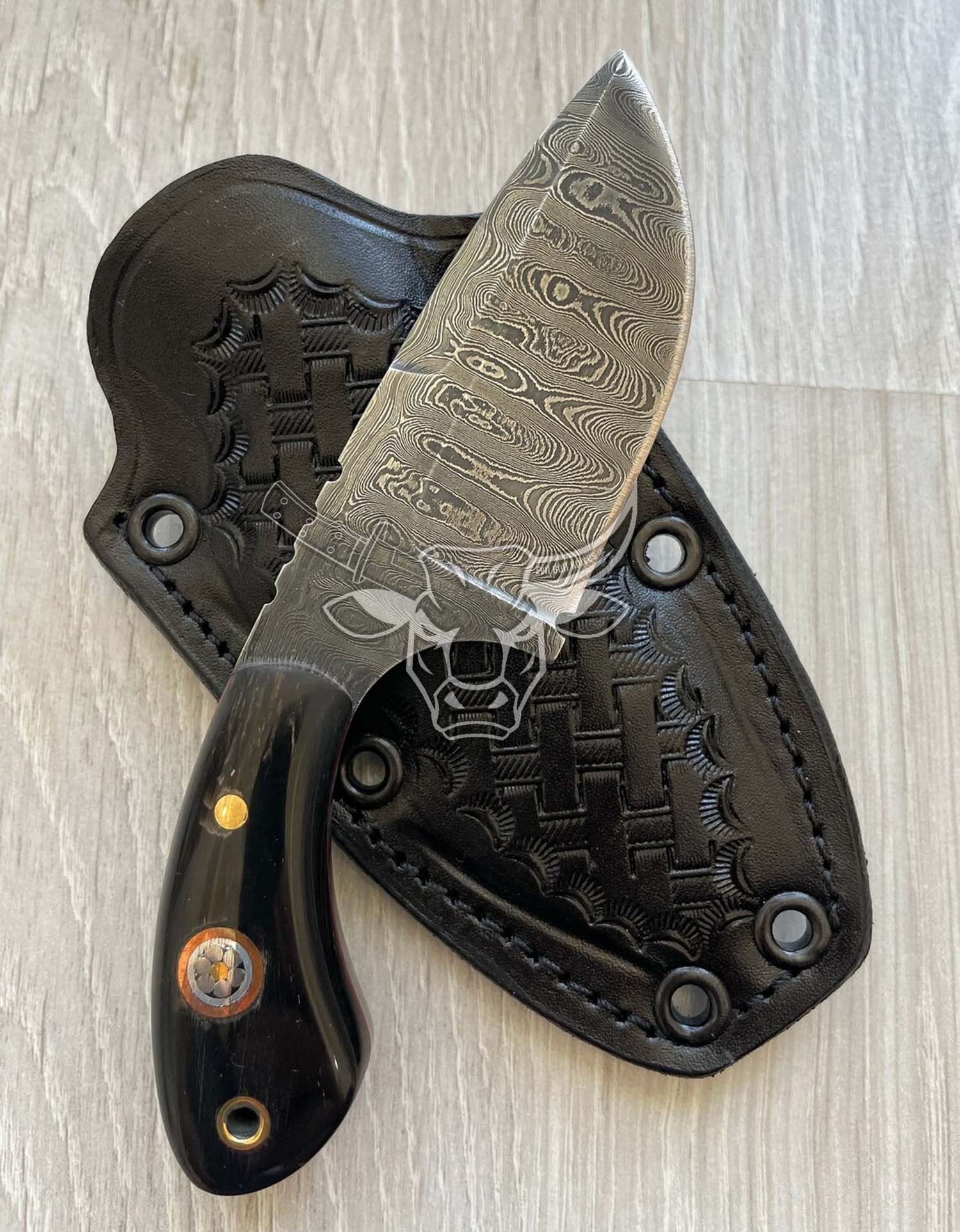
Modern Damascus is pattern welded steel. The smith stacks two or more different steels, forge welds them into one solid billet, then folds, twists or cuts that billet to move the layers around. After the blade is ground it goes into an acid bath. The steels react at different speeds, so one turns dark while the other stays bright, and that contrast is the pattern you see. It runs through the full thickness of the blade, which is why sharpening does not remove it.
Where our listings name the steels, they are 1095 and 15N20. 1095 is a plain high carbon steel that takes a keen edge and etches dark. 15N20 carries nickel, so it stays bright and gives the contrast. The Buck's Crown bowie, the Kage Tanto and the EBKS-02 Viking Sword all list this pairing, and the sword states 352 layers. Most other listings say Damascus steel and nothing more, so we will not guess a layer count for them.
Damascus knives compared
Ten pieces from this collection, one for each main type. Figures are taken from the product pages.
| Model | Type | Blade | Handle | Steel as listed |
|---|---|---|---|---|
| EBK-10 Mossback Bull Hunter | Hunter | 5 in | Stacked grip, brass spacers | Damascus steel |
| EBK-98 Stag Skinner | Skinner | 3.5 in | Stag antler | Damascus steel |
| EBK-71 Stag Guthook | Gut hook | 4 in | Stag antler | Damascus steel |
| The Buck's Crown EBK-003 | Bowie | 8 in | Wood with crown | Damascus (1095 / 15N20) |
| EBK-86 Canyon Stag Folder | Folder | 3.5 in | Stag horn | Damascus steel |
| EBK-37 Prismwood Chef Roll Set | Chef set, 5 pieces | 4.5 to 8 in | Stabilized wood | Damascus steel |
| EBK-102 Bone Fillet | Fillet | 8 in | Wood and bone | Damascus steel |
| EBK-T02 The Kage Tanto | Tanto | 4 in | Rosewood | Damascus (1095 / 15N20) |
| Valhalla's Edge EBK-175 | Axe | 4.5 in cutting edge | Rosewood | Damascus steel |
| EBKS-02 Viking Sword | Sword | 28 in | Wood | Damascus (1095 / 15N20), 352 layers |
How to choose a Damascus knife by use
Hunting and field dressing
A hunter with a blade of 4 to 5 inches handles most of the work on a deer. If you skin a lot, a skinner gives you more belly for long cuts, and a gut hook opens the hide without cutting into what sits underneath. The hunting models have their own page: Damascus hunting knives.
Everyday carry
A pocket folder with a blade around 3.5 inches is the one you will have on you when a box needs opening. Check your local carry rules before it goes in a pocket.
Camp and heavy work
For chopping and batoning, look at a bowie or one of the Damascus axes. Longer blades and more weight do the work a small hunter should not be asked to do.
Kitchen and fish
The chef sets give you several kitchen knives in one purchase. A fillet knife has a long narrow blade made for following a backbone.
Engraving
Custom engraving is offered on many of these knives. Where a product page lists it, engraving adds 2 to 3 weeks to production, and engraved or personalized knives are final sale. If a page does not mention engraving, ask us before you order.
Caring for a Damascus knife
Damascus made with high carbon steel will rust if it is left wet. That is the price of the edge it takes. Wipe the blade dry after use and put a thin coat of oil on it, food safe mineral oil if the knife touches food. Keep it out of the dishwasher. For long storage, leave it outside the leather sheath, because leather holds moisture against the steel. The full routine is in our guide to caring for a Damascus steel knife.
Damascus knife questions
Is Damascus steel good for a knife?
Yes, when it is made from proper blade steels and heat treated well. A 1095 and 15N20 blade performs like a good high carbon knife: it gets very sharp and is easy to bring back on a stone. The pattern is there for looks. The steel underneath does the cutting.
Does Damascus steel rust?
High carbon Damascus can rust. Dry it, oil it and store it somewhere dry, and it will stay clean for years.
How can you tell real Damascus from a printed pattern?
On pattern welded steel the lines continue over the spine and along the edge, and they are still there after sharpening. A pattern that is laser etched or printed on plain steel sits on the surface only, so it stops at the bevel and wears off with use.
Is every pattern different?
Yes. The layers shift each time a billet is forged, so your blade will not match the photo line for line. Natural handles such as stag and horn vary in the same way.
How do I sharpen a Damascus knife?
The same way as any carbon steel knife, on a whetstone or a guided sharpener at the angle already on the edge. Sharpening only touches the bevel, so the pattern on the flats stays as it is.
Can I return a Damascus knife?
Returns are accepted within 30 days of delivery. Engraved and personalized knives are final sale.


